
LIP & TONGUE-TIE TREATMENT NAPERVILLE
Eat, Sleep & Breathe Better with Lip & Tongue-Tie Treatment

Even the smallest strip of tissue in your child’s mouth can have a noticeable impact on their ability to properly feed, breathe, and sleep. Our team provides same-day, precise, and pain-free laser frenectomies for infants and children using our state-of-the-art DEKA dental laser. To learn more about this oral concern and schedule an examination for your child, call our office today to ask about lip and tongue-tie treatment in Naperville.
Why Choose Pediatric Dentistry & Orthodontics Consultants for Lip & Tongue-Tie Treatment?
- Soft Tissue Laser for Precise, Quick & Pain-Less Treatment
- Same-Day Frenectomies Available with a Diagnosis
- A Team That’s Prepared to help Address your Concerns with over 2500 of Successfully Treated Cases
How Do Lip & Tongue-Ties Develop?
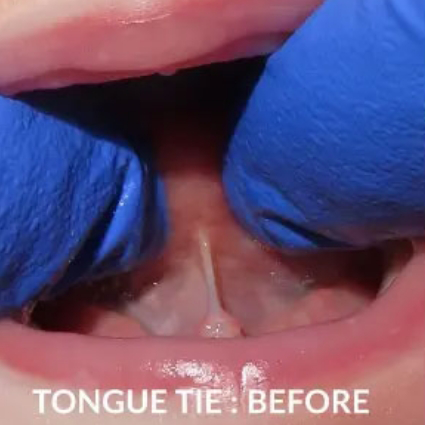
Lip and tongue-ties typically result of thick or malformed oral tissues. Tongue ties occur when the small band of tissue that connects your child’s tongue to the floor of their mouth is thick, short or malformed. The tongue tip becomes attached to the floor of the mouth restricting the movement and function of the tongue. Lip ties occur when the tissue connecting the lip to the gums are thick, short or malformed , restricting lip mobility. We can help assess whether treatment is necessary for your baby by conducting an examination of their mouth.
The Symptoms of a Lip & Tongue-Tie

Common signs that parents often notice in child that could indicate a lip or tongue-tie include:
- Difficulty latching while nursing
- Struggling to breathe during feeding
- Clicking sounds while nursing
- Falling asleep while nursing
- Laborious Nursing
- Slow or halted weight gain
- Colic or gastric problems
Nursing moms can also experience symptoms, including pain or fatigue while nursing, blocked milk ducts or mastitis.
How Do Lip & Tongue-Ties Affect the Baby’s Nourishment?

Lip and tongue-ties can affect the baby’s ability to move their lips and tongue, ultimately impeding their ability to nurse or feed from a bottle. Because their tongue and lips may not be able to latch properly, this could lead the baby to not receiving enough milk, ultimately causing them failure to thrive and malnourishment.
Why is It Important to Treat Lip & Tongue-Ties?

Whenever a more severe lip or tongue-tie is diagnosed, timely treatment is important to prevent certain issues arising as they get older. Without a frenectomy in Naperville, it’s possible that your child could experience the following:
- Be at a higher risk of grinding their teeth and developing cavities.
- Have a forward head posture that can lead to tension in the neck and shoulders.
- Be averse to eating foods with certain textures.
-
Have an increased risk of obstructive sleep apnea, which is a sleep-breathing disorder.
How Lip & Tongue-Tie Treatment Works
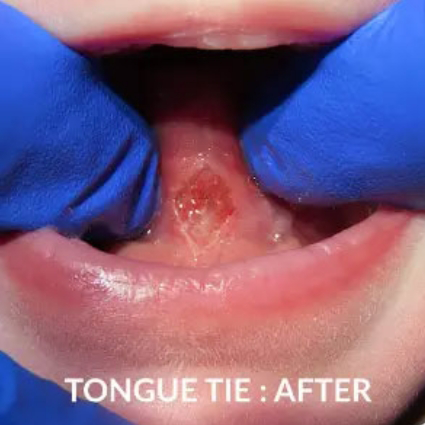
When you bring your child to Pediatric Dentistry & Orthodontics Consultants for a frenectomy, you’ll be able to rest assured that we will employ the most advanced soft tissue Laser technology to make it as comfortable and seamless as possible. Instead of using surgical scissors, like an ENT might use, we utilize our DEKA soft tissue laser to release the tissue on-contact without any bleeding. As a result, your child will experience no discomfort during and after their procedure, as well as faster recovery times.
After your child’s frenectomy, our team will show you how to perform regular stretches to prevent the tissue from growing back. Before leaving the office, you will feel confident enough to do these stretches with your child’s mouth at home!
Lip & Tongue-Tie Treatment FAQs
Does a frenectomy hurt?
Thanks to our DEKA laser, even the tiniest infants are able to stay comfortable during a frenectomy. The concentrated light energy can remove and loosen oral tissue, but the instrument emits almost no heat, sound, or vibration, meaning the child basically doesn’t feel anything. Plus, the area is sterilized and cauterized simultaneously, so post-treatment symptoms like bleeding, swelling, and soreness are reduced to practically nothing.
Can older children, teens, and adults have lip/tongue ties?
Yes! Despite lip and tongue ties often being diagnosed during infancy, many are missed. In older patients (as in not babies), they can lead to speech difficulties, trouble chewing, digestive issues, sleep-breathing problems, and even dental complications. One of the most obvious physical signs of a lip tie is a large space between the upper front teeth.
Because they can make breathing during sleep more difficult, they cause many children to snore or develop sleep-apnea-like symptoms, leading to sleep deprivation. A tired child can often have difficulty focusing or sitting still, which is why they are often misdiagnosed with ADHD! If your child is currently being treated for this condition, and it doesn’t seem to be helping, an unresolved lip or tongue-tie might be the actual culprit.
If any of these symptoms sound familiar, a screening should be performed. And if necessary, a laser frenectomy might be recommended.
Are there any diet restrictions following a frenectomy?
For infants, no, as they can feed immediately following the procedure whether they are nursing on milk or formula. For patients who consume solid foods, they’re simply advised to avoid anything too hot, cold, spicy, or acidic, as it could irritate the sensitive oral tissue as it’s starting to recover.
Will my insurance help pay for a frenectomy?
There are many medical and dental insurance plans that offer partial coverage for lip and tongue tie treatment, but the terms can be rather complicated. A person may only have access to benefits if the procedure is deemed “medically necessary,” the terms of which can vary from policy to policy. Others might only cover a traditional frenectomy as opposed to a laser one, or it may only be available for infants. Thankfully, the procedure has a relatively low out-of-pocket cost, which means concerned parents and patients don’t have to wait for approvals before it can be performed. We’ll talk about all of this in more detail when you come in for your screening/consultation so you’re fully aware of your options.